

Coming to iOS and Android
Collect real birds. Build their islands.
An archipelago of habitats adrift on a sea of clouds. You open an egg, a bird that really exists hatches, and the island grows to make room for it. You set the pace.
Open an egg- birds at launch
- 915
- islands at launch
- 6
- in the catalogue
- 10,548
birds at launch
islands at launch
in the catalogue


The game loop
Every bird grows the island
The birds you have on display make Vital Essence. Essence levels you up, the fog pulls back and room appears for more birds, which make more Essence. That circle is the engine of the game.
You make room
Every level uncovers a part of the island that was under the fog. There are nine corners in each one, and room comes before the bird.

You let it incubate
Eggs incubate in real time, from ten minutes to two days, and the island keeps producing while you are away, up to twelve hours.
And you watch
The birds on display are the ones that produce, so the more you show, the more Essence comes in. How many counts, not which ones.
The odds
The more you have, the closer the missing one gets
Twenty birds from one island, with the game’s rule and the game’s weights. Every egg you open shares weight out towards the ones you are missing, so the one you want can only get closer. Open them all and watch.

- Found
- 0 / 20
- EggsEggs opened
- 0
Every egg pushes up the ones you have left.
Common×10
weight 1.0
 Yellow-bellied Sapsucker7.82 %
 Mountain Chickadee7.82 %
 Rufous-tailed Hummingbird7.82 %
 Yellow-throated Toucan7.82 %
 Scarlet-rumped Tanager7.82 %
 Andean Motmot7.82 %
 Common Raven7.82 %
 Great Horned Owl7.82 %
 Sharp-shinned Hawk7.82 %
 Brown Shrike7.82 %
Uncommon×6
weight 0.40
 Highland Guan3.13 %
 Three-wattled Bellbird3.13 %
 Red-bellied Grackle3.13 %
 Cuban Amazon3.13 %
 Cuban Trogon3.13 %
 Moustached Puffbird3.13 %
Rare×3
weight 0.12
 Santa Marta Bush-Tyrant0.94 %
 Elfin-woods Warbler0.94 %
 Hooded Antpitta0.94 %
Very rare×1
weight 0.03
 Short-crested Coquette0.23 %
The coloured dot says how the species is doing in the real world, according to the IUCN Red List.
The rule and the weights are the game’s: every time a species comes out — the first time and when it repeats — it keeps 60 % of its weight and the other 40 % is shared out among the ones you are missing. The only thing this table changes is the size: twenty birds here, 175 on that island at launch.
The archipelago
Fourteen islands, fourteen worlds
From páramo to rainforest, from mangrove to desert. Every bird lives on one of them, and every island opens as you discover birds.
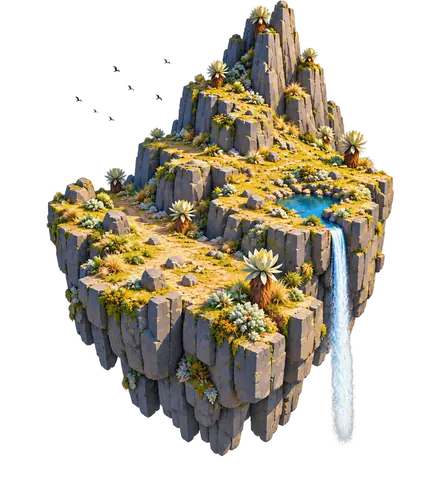
High mountain and páramo
Summits around the world
Opens later on

Cloud forest
Tropical Africa and Asia
Opens later on

Cloud forest
Australia and Oceania
Opens later on

Cloud forest
The Americas
175 birds at launch
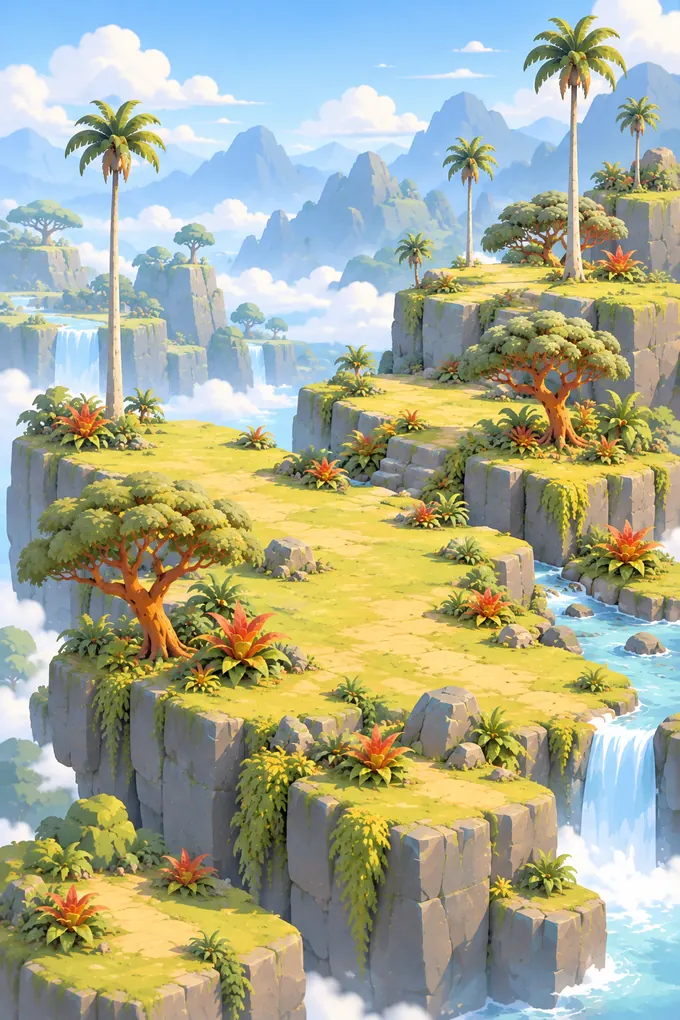
The woods
Inside · Cloud forest

Temperate and boreal forest
The far north
115 birds at launch

Wetland, mangrove and swamp
Fresh and brackish water
175 birds at launch

The water
Inside · Wetland

Sea and coast
Cliffs, beaches, open sea
120 birds at launch

Scrub and desert
Dry country
Opens later on

The spring
Inside · Scrub and desert

Grassland
Open plains
Opens later on

Savanna and dry forest
Seasonal tropics
130 birds at launch

Lowland rainforest
Africa
Opens later on
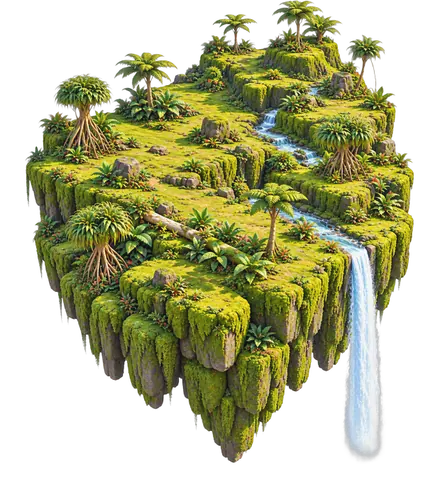
Lowland rainforest
Australia and Oceania
Opens later on

Lowland rainforest
The Americas
200 birds at launch
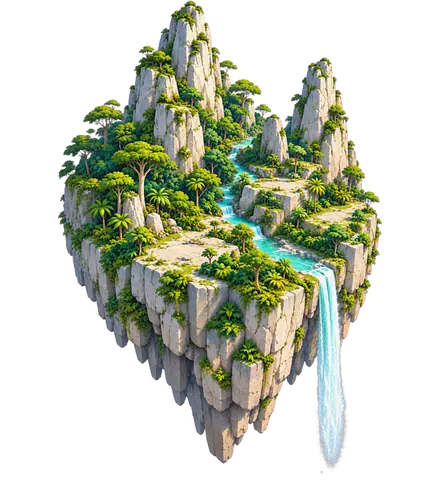
Lowland rainforest
Tropical Asia
Opens later on
Six islands launch with birds — 915 between them — and the other eight open as you go. Between the fourteen they hold all 10,548 species in the catalogue, and each one has nine corners inside: the wetland’s water and the desert’s spring are two different landscapes.
The birds
Painted one by one
Every bird in the game really exists, with its name, its habitat and its Red List status. And each one has a plate of its own: 915 to begin with, all different.
Andean Motmot
Least concern

Lilac-breasted Roller
Least concern
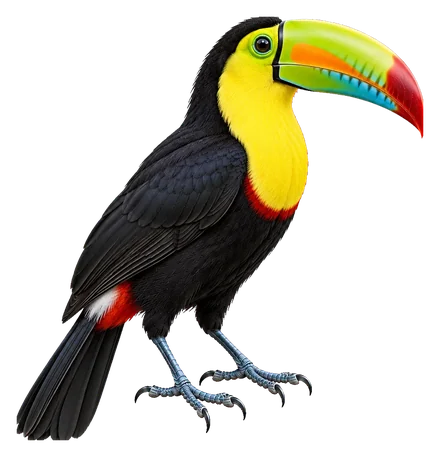
Keel-billed Toucan
Near threatened

Common Kingfisher
Least concern
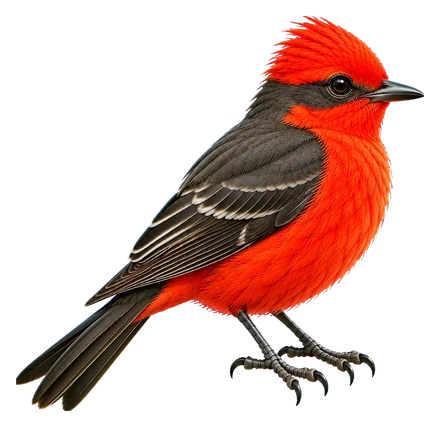
Vermilion Flycatcher
Least concern

Common Hoopoe
Least concern
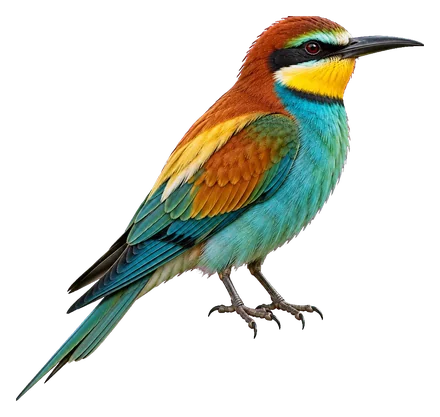
European Bee-eater
Least concern
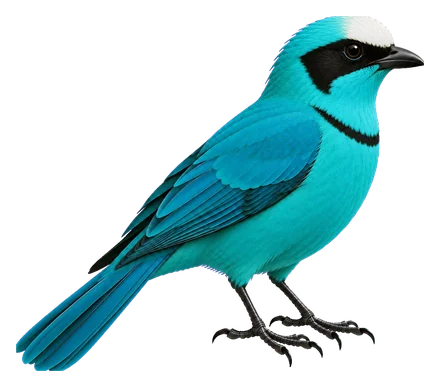
Turquoise Jay
Least concern
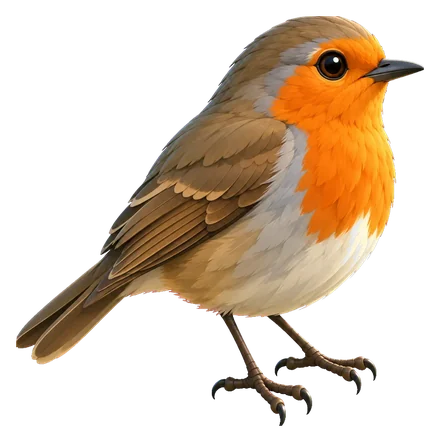
European Robin
Least concern

Red-winged Fairywren
Least concern

Toucan Barbet
Near threatened

Cape Starling
Least concern

Mountain Bluebird
Least concern
Cuban Trogon
Least concern
Fourteen of the 915. The one in the logo came first: an Andean motmot. Names, habitats and rarity come from eBird, the IUCN and GBIF.

The conservation island
An island we will open together
You can see it from day one, floating at the far end of the archipelago. It opens for every player at once, the day what we raise is enough to buy a real forest.

With money, not Essence
It is the one island you cannot open by playing. On the other side there is a real forest, with its trees and its place on the map, and that is bought.
And for good
Bought once and it stays bought. A protected forest needs paperwork, boundaries and someone watching over it, and that is part of the bill.
The forest is not bought yet. The day it is, we will say how much, where and with whom.

Frequently asked
In case you were wondering
- What kind of game is Motmot Isles?
- A collecting game for iPhone and Android. You open eggs, each one hatches a bird that exists for real, and your island grows to make room for it. You play it in small doses, and you compete with nobody.
- Do I need to know about birds?
- You need to know nothing about birds to start. Every egg introduces a new species with its name, its habitat and how it is doing in the real world. You can arrive without knowing a single bird and end up recognising hundreds.
- Is it free?
- It is free to play. There will be an optional membership that doubles what the game gives you — eggs, storage, nests and Essence — never eggs sold on their own, and never better odds for paying. The price is not decided yet.
- When does it come out?
- There is no date yet, and we would rather not invent one. What you can see is the progress: we write it up in News every few weeks. Leave your email and we will tell you the day it opens, and sooner if you join the test.
- Do I have to play every day?
- You play whenever you feel like it. The island waits exactly as you left it: you come back and pick up where you were, with your birds in their places.
- What happens when I get a duplicate?
- It turns into Vital Essence, which is what grows the island. And it lowers its own odds too: the weight it drops is shared out among the species you are still missing, so a duplicate also brings you closer to the one you want.
- Does the island fill up over time?
- The island is whole from day one; what changes is how much of it you can see. You level up and the fog pulls back.

Come and watch them arrive
The archipelago is still growing. Leave your email and we will tell you the day it opens — and sooner, if you want to test it with us.
Or follow along here in the meantime: